




Valencia Educational Consulting logo with a compass rose and overlapping teal seal glass.

Meet Susie valencia

The Person Behind the Method

There are consultants who know the system. Then there are those who genuinely understand your family, because they've lived it, studied it, and spent over 20 years choosing to be the person in the room who really listens.

Stylized brown and gold compass rose with eight primary and secondary points inside a square frame.

her story

A Path That Was Never Linear.
And Always Intentional.

Susie Valencia wearing a green floral top sitting outdoors with large gray rocks behind her.

If you asked Susie how she ended up in college advising, she'd probably tell you the answer over coffee, because it's not a short one. She didn't take the expected route. She took the meaningful one.

She earned her B.S. in Psychology and Ocean Studies from the University of San Diego (already a signal that she has never been one to fit inside a single lane), then her M.S. in Counselor Education from Mississippi State University. She built her early career as a Licensed Professional Counselor (LPC) and Nationally Certified Counselor (NCC) in Colorado: children's therapy, family reunification, financial counseling for military families, school counseling at every level. Through every role, the throughline was the same, helping young people find their footing during the seasons that feel most uncertain.

"While college admission may be the outcome on paper, what really matters is helping students become self-aware, capable, and ready for life beyond high school."

When her own children grew older, she transitioned into college counseling, not as a career change, but as an evolution. In 2020, a pandemic-era position was eliminated, and she built Valencia Educational Consulting from the ground up. She'll tell you it was the best thing that could have happened. Working one-on-one, getting to truly know a family over time, watching a student move from uncertain to undeniable: that turned out to be the work she was always meant to do.

In 2022, she earned her Certified Educational Planner (CEP) designation, held by fewer than 600 professionals nationwide and fewer than 5% of independent educational consultants globally. It wasn't about the credential. It was about the standard.

Cluster of four rounded  sea glass stones in brown, teal, dark blue, and green with black edges.
The CEP Designation

She Hasn't Just Read About These Campuses.
She's Walked Them.

The Certified Educational Planner is the highest credential in independent educational consulting, and one of its most demanding. Earning it requires a master's degree, 4–5 years of documented professional experience, a minimum of 30 evaluative campus visits, and a rigorous board-certifying assessment. Keeping it requires 70 evaluative campus visits and 70 hours of professional development every five years.

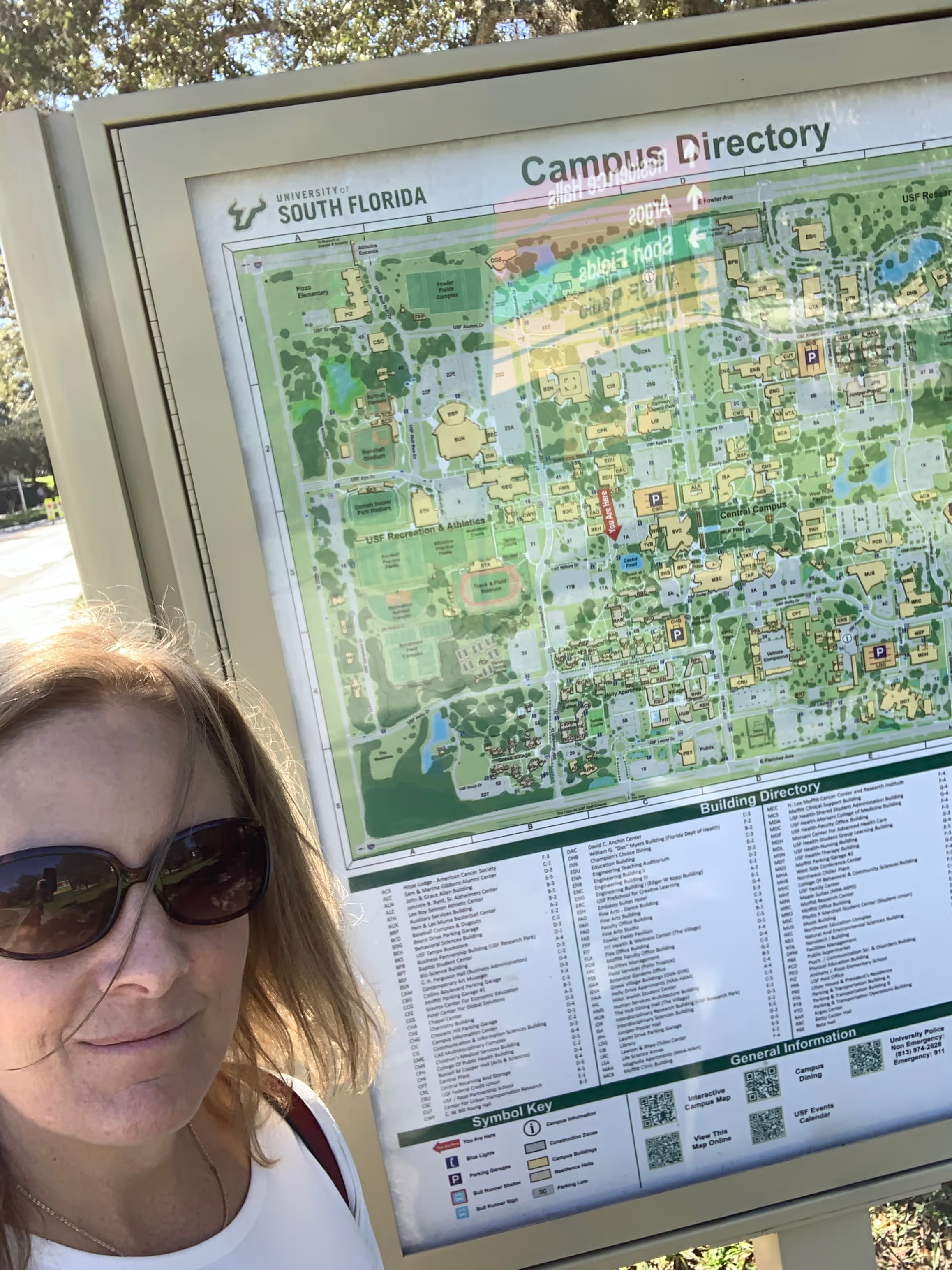
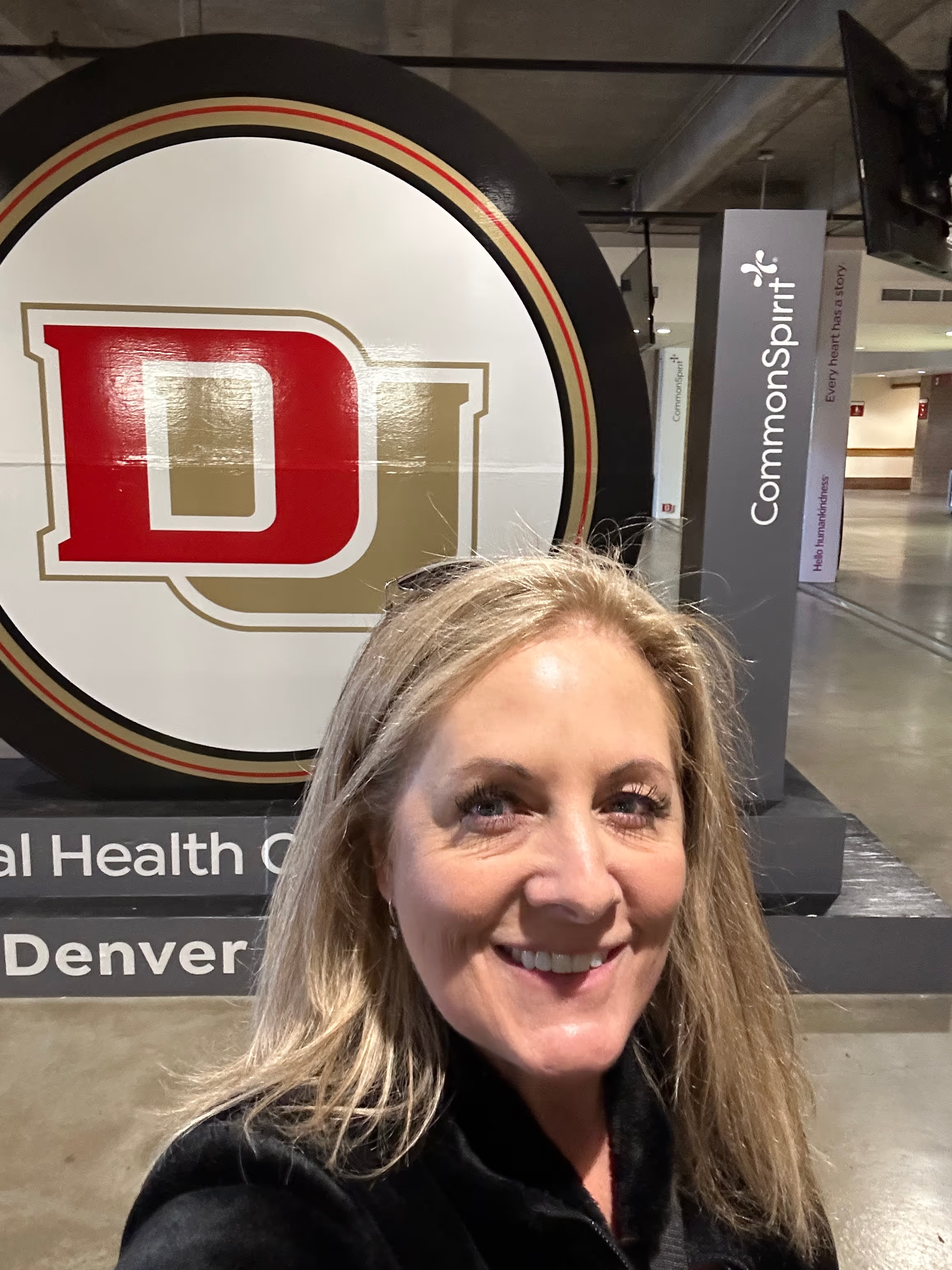
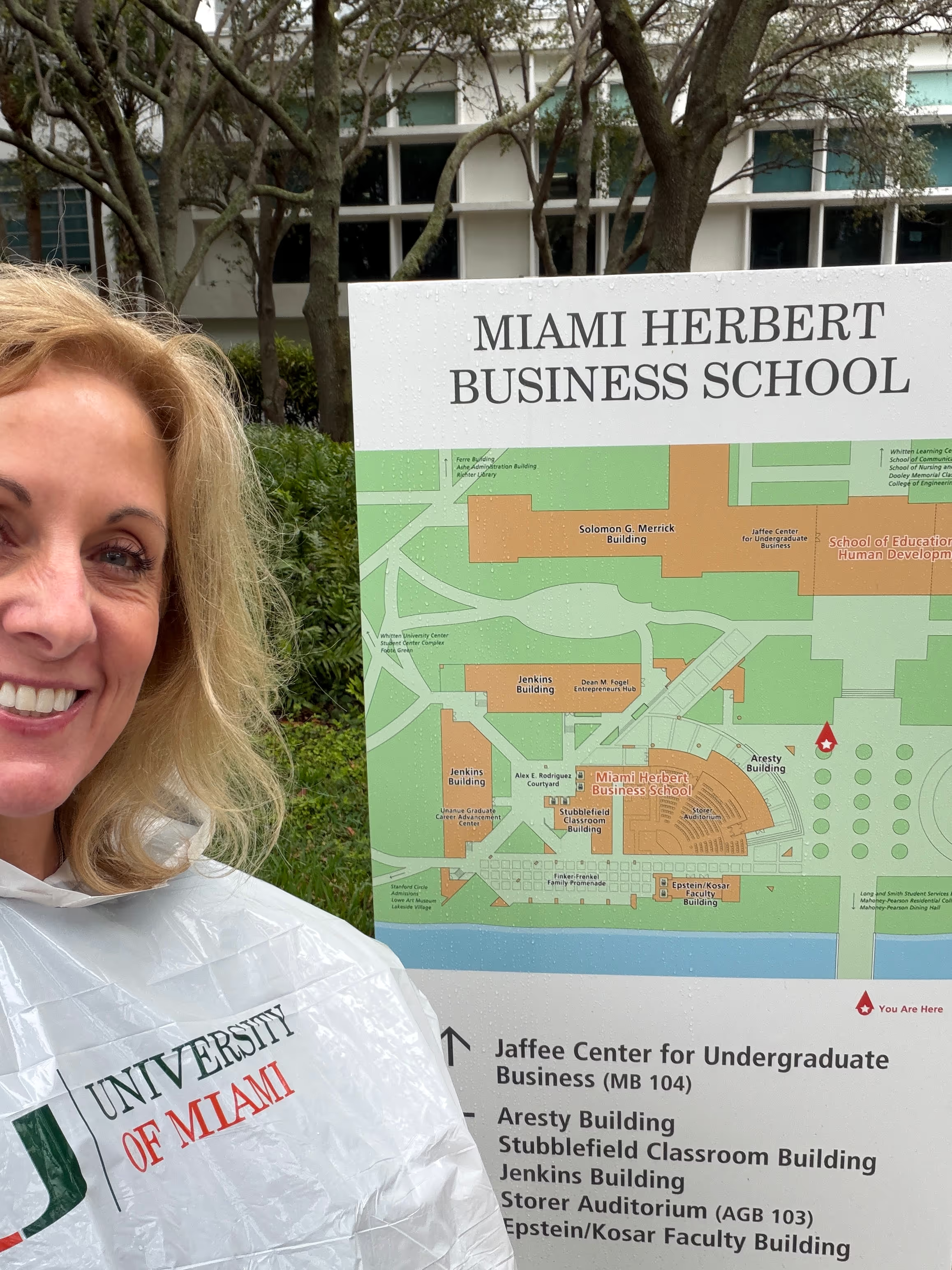
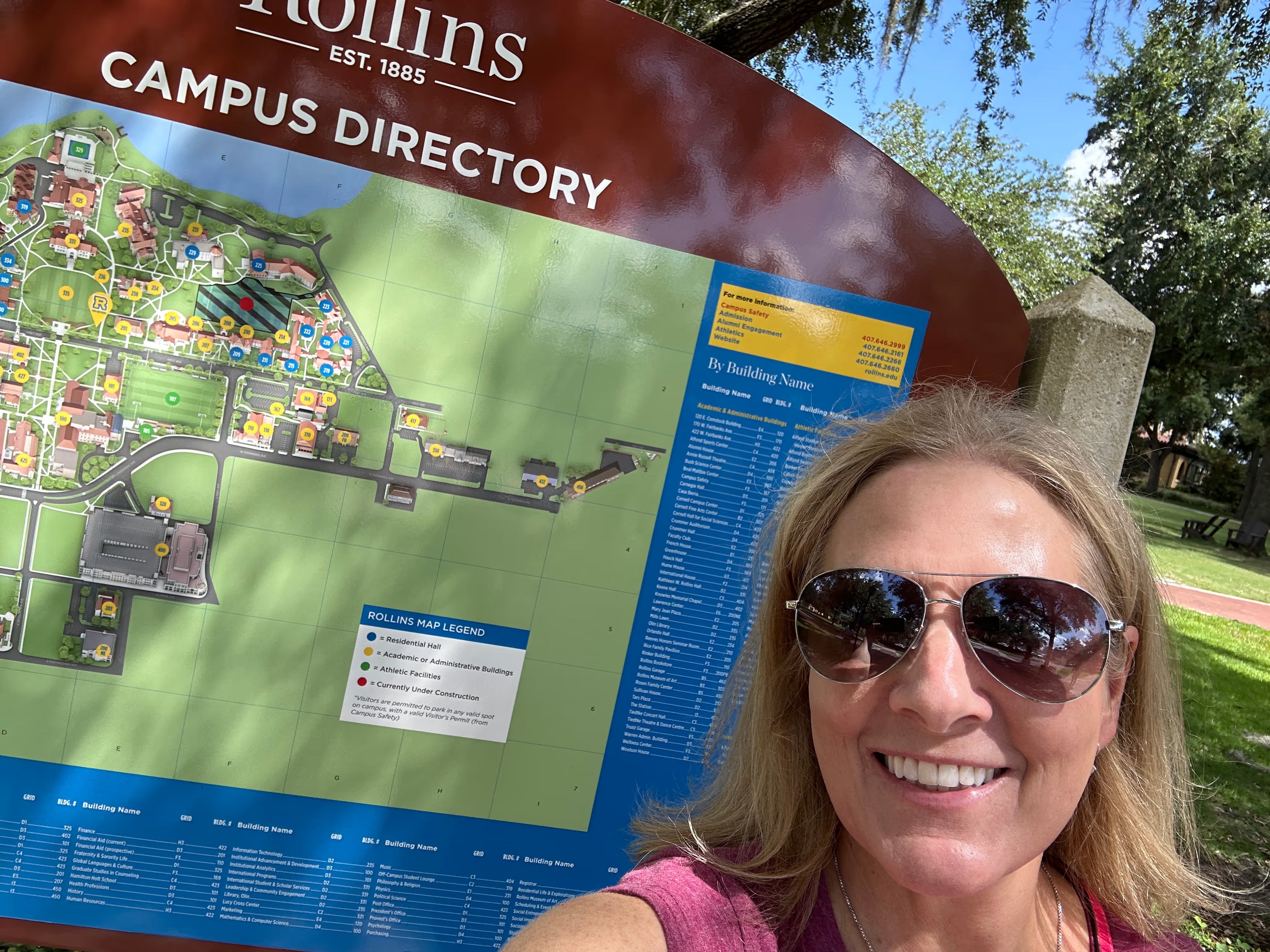
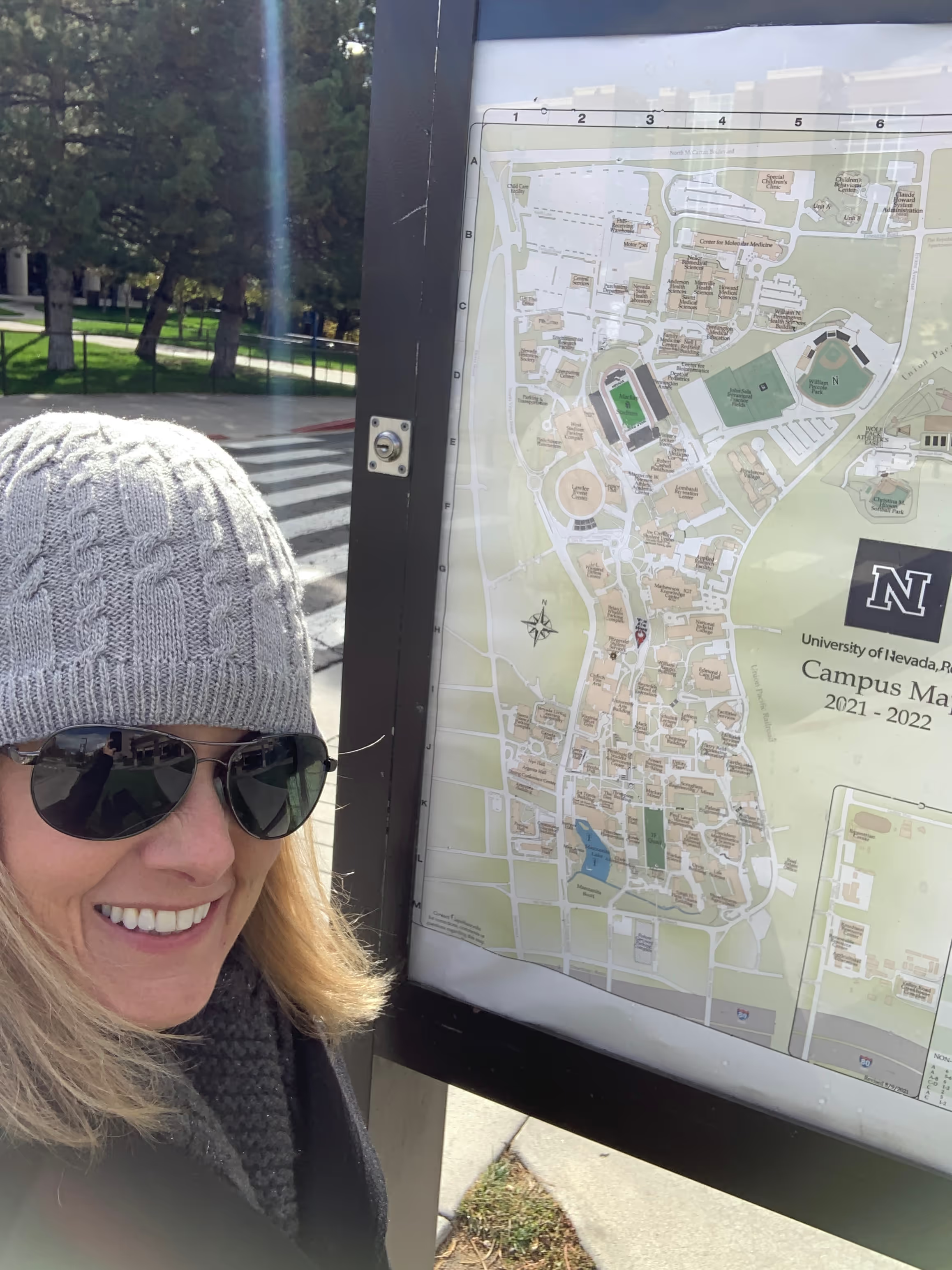
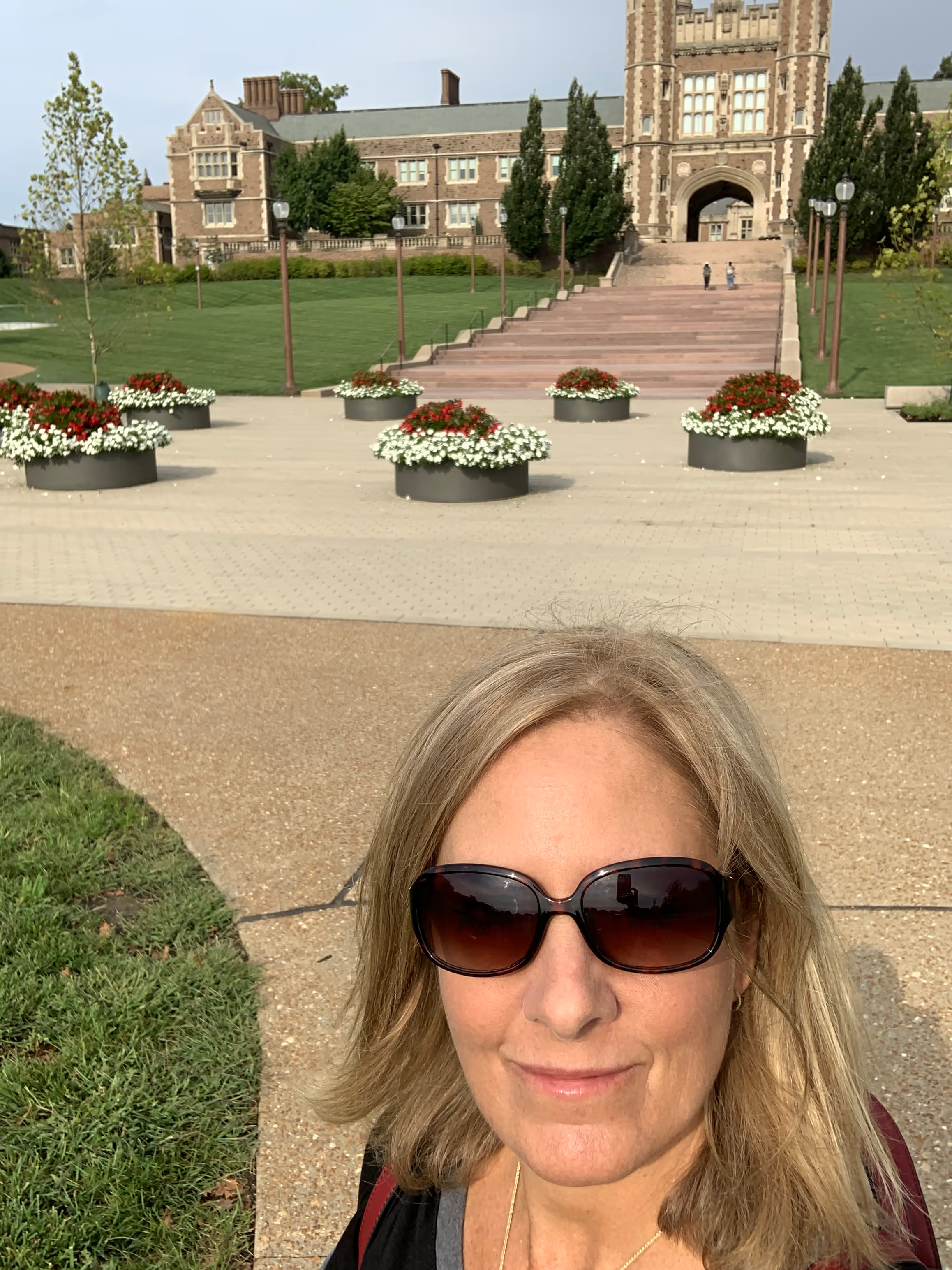
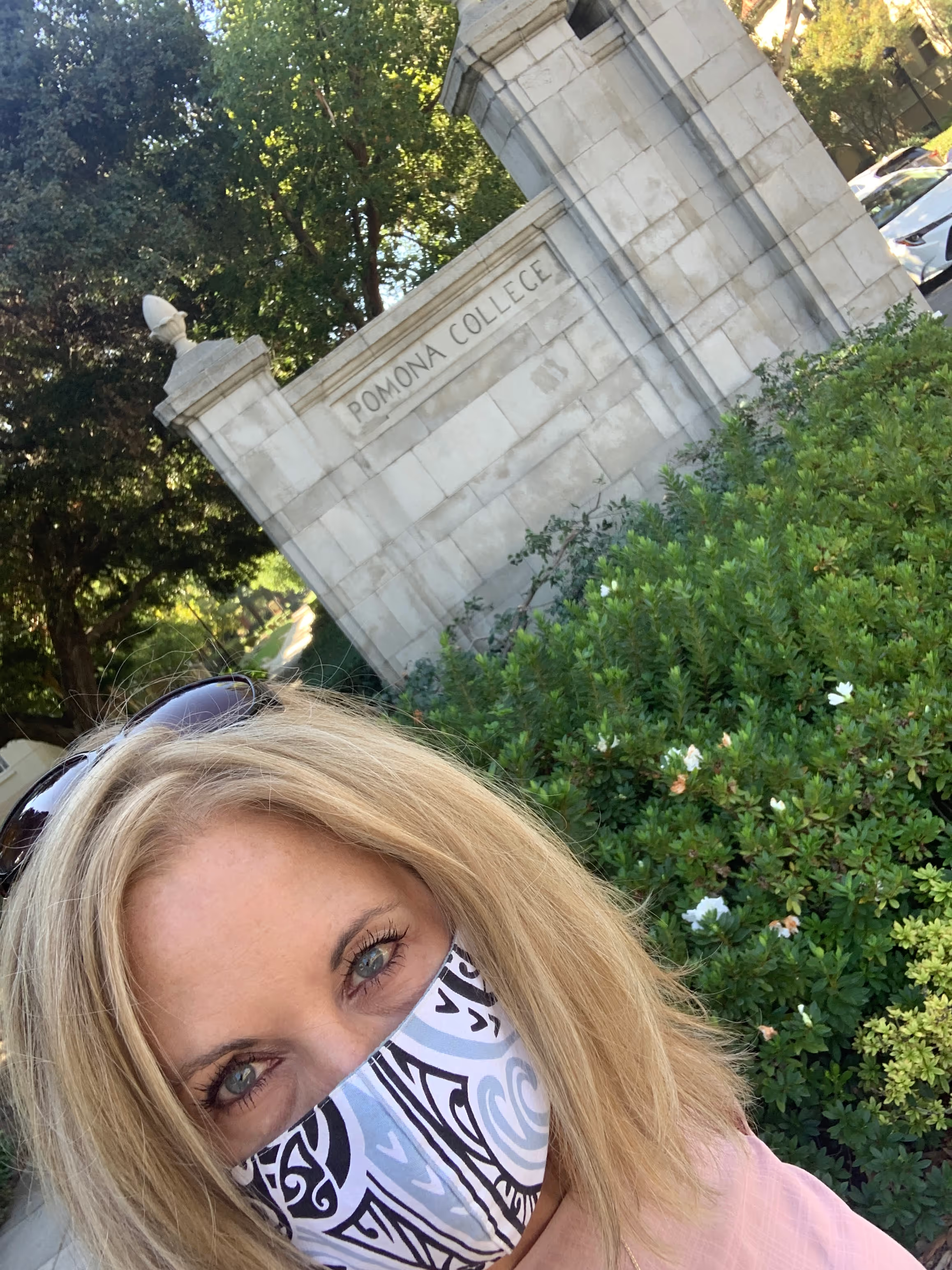
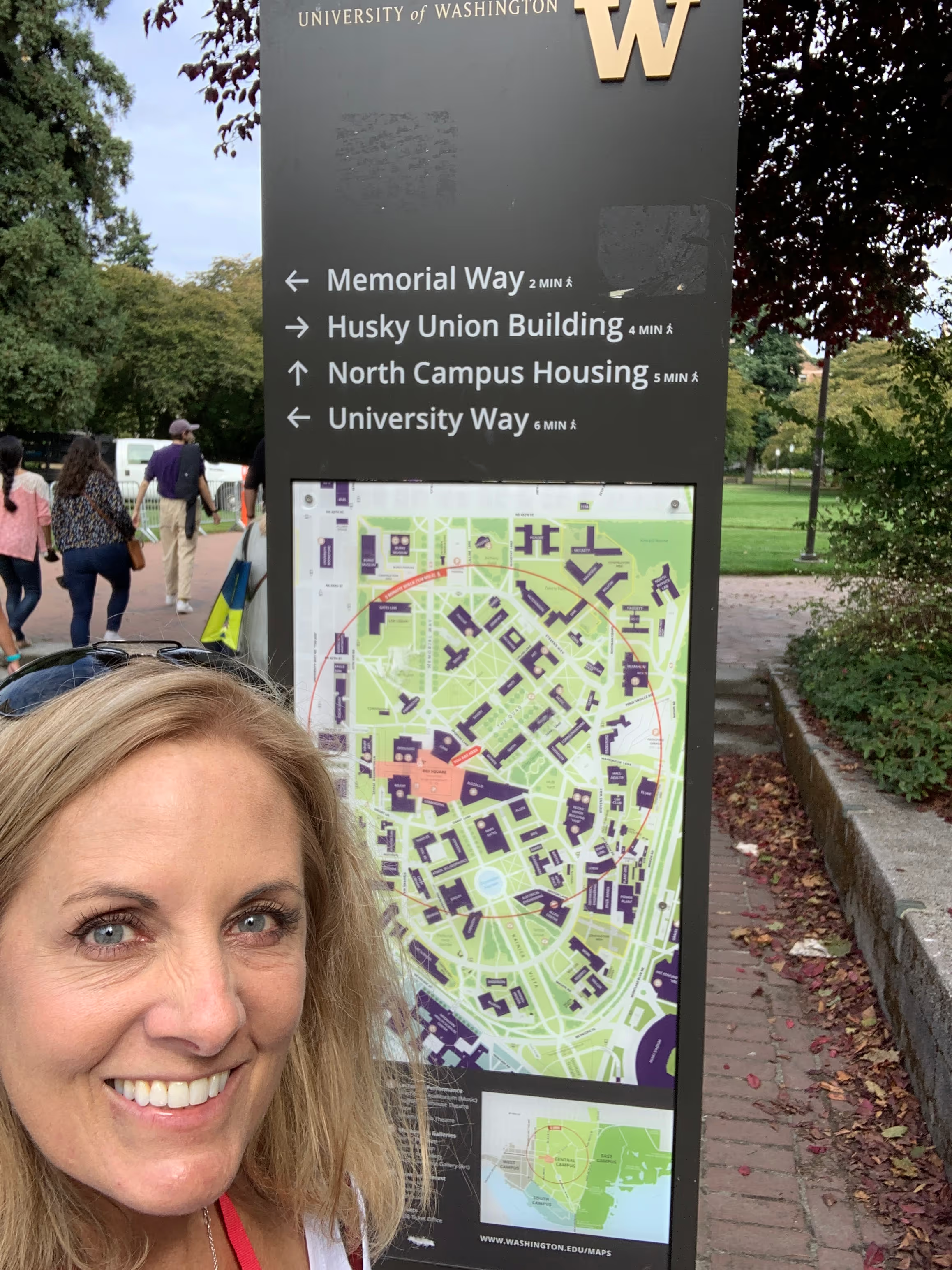
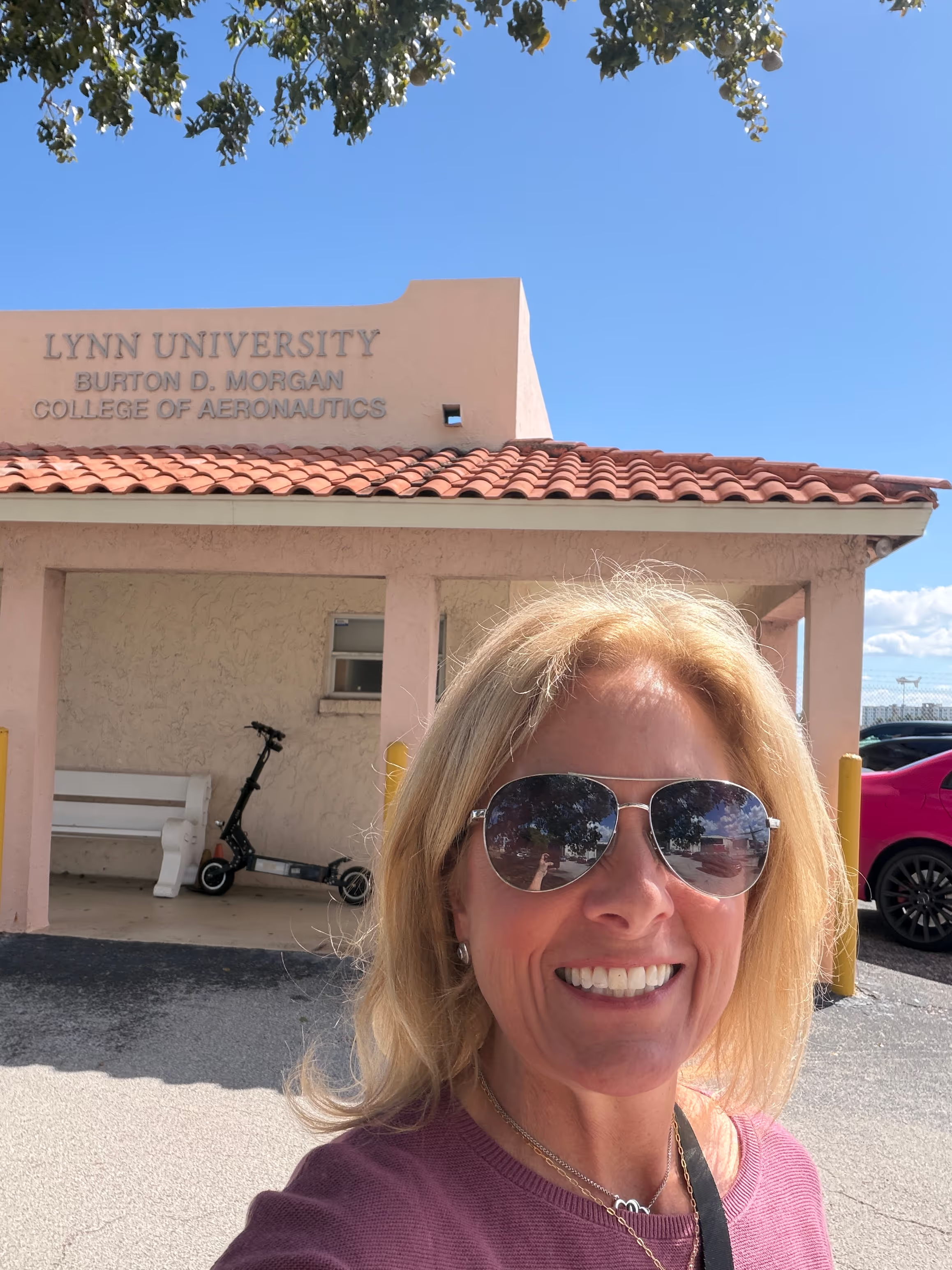
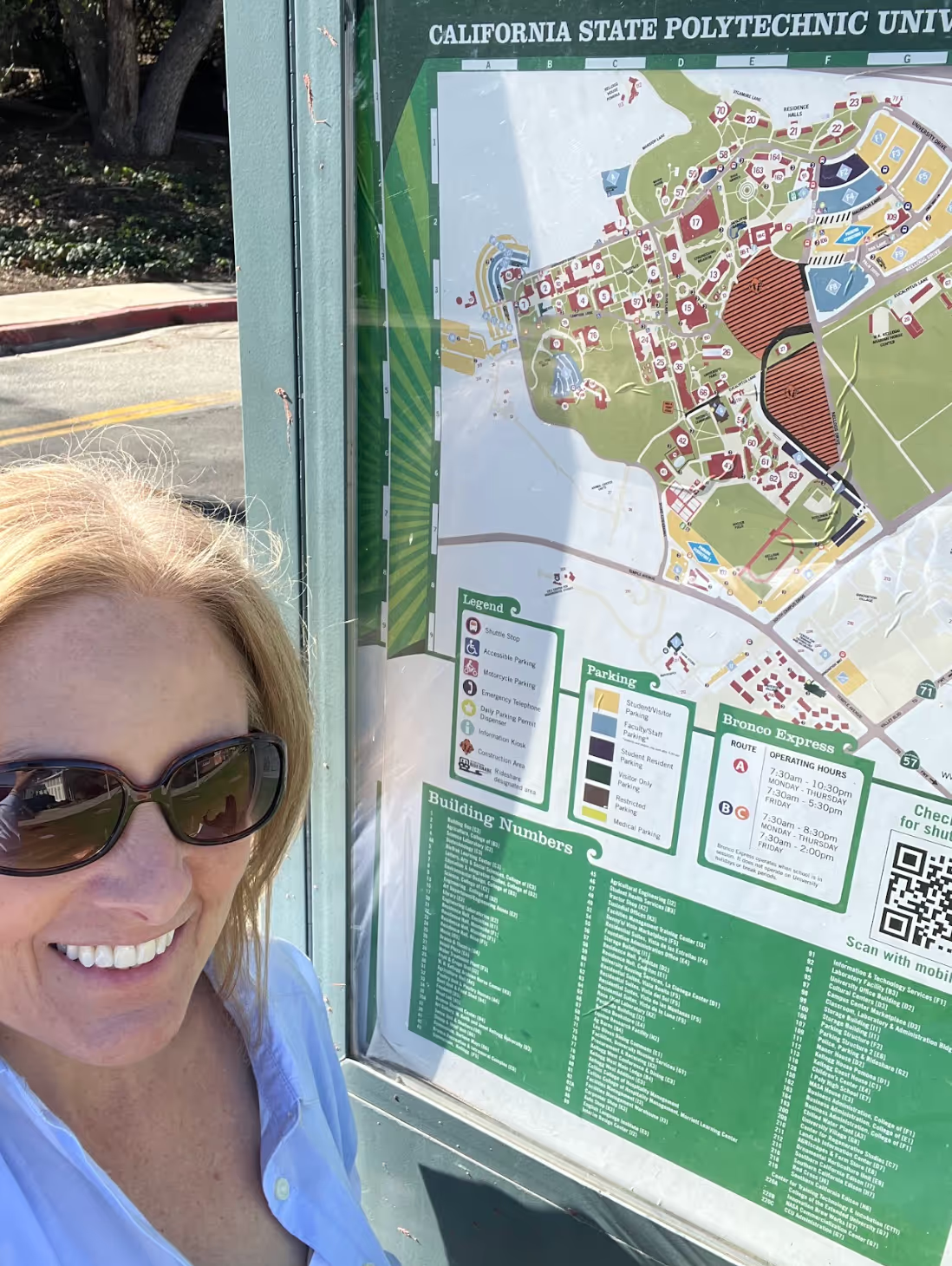
Susie has personally visited over 100 campuses, and she adds to that number every year, traveling domestically and internationally to stay current on admissions priorities, program nuances, and what fit actually feels like from the inside. When she recommends a school, she is not working from a database. She is working from proprietary research.

<5%
Rarest in the field of independent educational consultants worldwide hold the CEP designation.
125+
Campuses, personally evaluative visits completed, well above the 70 required per recertification cycle.
20+
Years of experience spanning clinical counseling, school counseling, and independent advising.
30
Senior cohort cap by design, not necessity, so every student gets her full attention.
University of South Florida
University of Denver
University of Miami
University of Sterling
Rollins College
Nevada Reno
College Visit 2
SLU
Pomona College
University of Washington
Lynn Aviation
Additional Visit
Decorative compass rose with brown and teal geometric patterns in a star-shaped design.
The Whole Person

A Life That Shaped the Work.

Susie asks every student a version of the same question: who are you when nobody's watching, and what lights you up when there's no grade attached? She holds herself to the same standard. She isn’t just an advisor; she’s a parent of three, one of whom is currently navigating senior year in real-time. Whether she's paddleboarding, tending her ever-growing plant collection, or helping her students, her philosophy is simple: the work that matters requires presence, not a portal.

Susie Valencia in the cockpit of her father's Vietnam-era plane at age 23
Military & Aviation

This One Is Personal.

Susie's connection to the military and aviation communities doesn't begin with a credential. It begins with a photograph: her at 23, standing on the plane her father flew in Vietnam. Her husband is a retired naval pilot. Her son is at Colorado State, hoping to follow his grandfather and dad into military aviation. This is not a professional interest. It is the landscape she has always lived in.

She's worked as a financial counselor for young service members, helping them budget, manage emergencies, and find their footing in military life. Her fluency with VA Education Benefits came later, and more personally: she guided two of her own children through the eligibility process, navigating the Yellow Ribbon Program, ongoing requirements, and the state and school-specific benefits most families never know to ask about. That knowledge wasn't studied for a certification. It was earned at the kitchen table.


Susie Valencia volunteering with wildlife
The Natural World

The Power of Curiosity.

There is something you should know about Susie that does not appear anywhere in a credential list: she has helped hand-raise a cheetah and puppy as a bonded pair, travelled across the country with porcupines, bottle fed binturongs, and continues to provide care and enrichment for all of the animal ambassadors living at Wild Wonders in Bonsall, CA.

For over a decade, she has volunteered with a wildlife education and outreach organization, not occasionally, but as a consistent, committed presence. She trains. She mentors. And in a detail that will surprise no one who knows her, many of the people she works with there are high school students, college students, and recent graduates finding their way.

It is a window into who she is outside the office: someone with a lifelong relationship with the natural world, a capacity for patient and attentive care, and an Ocean Studies degree from the University of San Diego that was never just a major. She means it when she tells students that leaning into the weird, specific, wonderful things they love (the things that have never appeared on a résumé) is exactly what makes them memorable.

Brown and gold compass rose within a square on abstract teal and green pieces of sea glass.

Ready to Reclaim Senior Year?

The process is complex, but the next step is simple. Reserve your family's complimentary strategy session to see which of our tailored pathways is the right fit for your student.

  1. 01
    Step One

    The Discovery Consult

    We discuss your student's current trajectory, identify where the friction lies, and map out exactly what kind of support your family needs right now.

  2. 02
    Step Two

    The Pathway Proposal

    We outline a customized, structural strategy tailored to your specific goals, whether that means comprehensive full-service advising or targeted hourly support.

  3. 03
    Step Three

    The Hand-Off

    You step down as the project manager, and we step in. The deadlines are handled, the accountability is established, and you go back to being the parent.

Admissions Clarity.

Navigate the complexities of modern college admissions with precision and strategy.

Early Planning

My child is only in 8th grade. Is it too early to start thinking about college?

As crazy as it sounds, no. But I only suggest 2 things: 1. Strategic course planning, because the classes you choose now will impact what you will be able to take during high school. 2. Explore lots of activities to identify those that spark curiosity, bring joy, and develop skills.

What should a student be doing in middle school or freshman year to keep future college options open?

Take your academics seriously from Day 1. If you are struggling with a subject or a concept, get help. Learn to study smarter, not harder. And develop organizational and time-management skills.

How important are high school course selections, and when do they start to matter?

Very, and right from the beginning. Students should take the most challenging courses they are capable of succeeding in. Rigor is a major factor in how college applications are evaluated. It’s also important to take classes (when available) that align with your major and career goals.

What extracurricular activities do colleges actually value most?

It’s not the activity itself that matters, but what you accomplished while participating. Colleges are looking for drive, determination, longevity, initiative, leadership, and impact. Students should choose activities that are personally meaningful, and grow into a few of them during their 4 years in high school. Quality is always more significant than quantity.

How do I track college planning hours and activities?

Start a "brag sheet" or digital portfolio early. Documenting hours, leadership roles, and specific achievements as they happen prevents the frantic scramble during application season and provides rich detail for essays.

Academic Strategy

How many colleges should my student apply to, and how do we build a balanced college list?

A balanced list of 8-12 schools is ideal, though many students do apply to more, especially if they are applying to highly competitive or capped programs, such as Engineering, Business, and Nursing, as well as niche majors like Musical Theatre or Architecture.

What are colleges looking for beyond grades and test scores?

The bottom line is that colleges are looking for students who will succeed in college and in their specific major, and who will make positive contributions to the campus community and the broader community.

Should my student take the SAT or ACT, and when is the best time to test?

Colleges seem to be swinging back toward requiring standardized test scores. I recommend that all students take the SAT or ACT and spend 6-8 weeks studying intensively before they sit for the exam. Students should be ready to take their first official test after completing Algebra II.

What is the difference between a high school academic advisor and a college admissions consultant?

High school advisors manage massive caseloads and focus on meeting graduation requirements. A private consultant provides personalized strategy, deep list-building research, rigorous application management, and personalized mentorship to actively optimize admission outcomes.

Should we focus on "Early Action" or "Early Decision"?

Early Decision (ED) is a binding commitment and should only be used if a school is the absolute top choice and finances are clear. Early Action (EA) is non-binding and highly recommended to demonstrate interest and secure early acceptances.

How do I choose between a BA and a BS degree in the same field?

A BS (Bachelor of Science) is typically more heavily weighted in technical, quantitative coursework, while a BA (Bachelor of Arts) allows for broader exploration in the humanities. Your choice should align with your specific career goals and graduate school intentions.

Applications & Admissions

When should students begin working on their college applications and essays?

If you are following the method I use when working with students, they begin working on their applications from our first meeting. However, the nuts-and-bolts of filling out forms, writing essays, and submitting documentation begins the summer prior to their senior year of high school.

What are the biggest mistakes students make during the college application process?

Not starting soon enough, rushing and producing a poor quality or incomplete application, and not having a balanced college list.

How can students stand out in an increasingly competitive admissions environment?

There is no short answer. With holistic review, colleges look for students who are more than just a GPA. In recent cycles, colleges favor students who show a deep interest and commitment to their stated field of study, whether through coursework, outside projects, research, or other experiences.

How does a college verify if an activity or award is real?

Universities increasingly audit applications. They verify through counselor recommendations, by contacting listed supervisors, or by looking for a logical paper trail of sustained involvement within the rest of your application materials.

What is a "Letter of Continued Interest" (LOCI) and when do I send it?

An LOCI is sent if a student is deferred or waitlisted. It reiterates that the school remains a top choice and provides concrete updates on academic or extracurricular achievements since the original application was submitted.

How much weight do letters of recommendation actually carry?

Significant weight. They provide the committee with context about your intellectual curiosity, character, and classroom presence that a transcript cannot show. Choosing the right teachers to write them is a critical strategic step.

Financial Considerations

How can families reduce the cost of college and maximize merit scholarship opportunities?

Be sure that you are filing out the FAFSA and other financial forms correctly. Don’t miss deadlines for priority consideration for scholarships, and spend time on each school’s website actively seeking overall academic and major-specific grants. If finances are a deciding factor, be strategic about which schools you apply to.

Is hiring a college advisor worth the investment, and how can guidance improve outcomes?

Working with an experienced advisor can significantly improve a student’s chance of admission and the likelihood of receiving merit money. We recommend vetting anyone you consider hiring through professional organizations like IECA or HECA.

What is the difference between "Need-blind" and "Need-aware" admissions?

Need-blind schools do not consider a family's ability to pay when making admission decisions. Need-aware schools may factor financial need into their decisions, particularly for students on the margin of acceptance or off the waitlist.

Can we negotiate a financial aid package?

Yes, through professional appeals. If your family’s financial circumstances have changed (or if a competing university offered a better package), we provide the strategy and language to request a reconsideration.

What is the impact of "test-blind" vs. "test-optional" on my financial aid?

Even at test-optional schools, standardized scores are frequently used to distribute merit aid. Test-blind schools will not look at scores for admission, but you must verify their specific policy on how they allocate institutional scholarships.

The IE & Regional Edge

What is the biggest misconception parents have about college admissions today?

That all schools are hard to get into and that prestige and name recognition are the only keys to future career success.

How much does a student’s major matter when applying to college?

Quite a bit. At many colleges, decisions are made by the specific academic program. Students should apply to the major they genuinely want to pursue, because transferring into a more competitive major after enrollment is often difficult or impossible.

How does Valencia Educational Consulting help Temecula/IE students stand out?

We understand the specific rigor and academic culture of the Inland Empire. We help students leverage community opportunities to create a tailored profile that catches the eye of selective admissions officers at UC and out-of-state flagships.

Are you familiar with the specific requirements for UC and CSU admissions?

Yes. Navigating the UC and CSU systems is a specialty of our practice. We specialize in the 13-point holistic review, crafting compelling Personal Insight Questions (PIQs), and ensuring students meet A-G requirements.

How do I leverage local internships in Temecula/Murrieta for applications?

We guide students to frame local business, agricultural, or civic internships not just as "hours worked," but as demonstrations of initiative, regional impact, and practical application of their intended major.

Does being from the Inland Empire impact "geographic diversity" at national colleges?

Absolutely. Elite out-of-state private universities actively seek geographic diversity. Framing your unique regional background, distinct from the typical LA or Bay Area applicant, can serve as a powerful differentiator in your application narrative.